

J.N. Ding Darling National Wildlife Refuge on Sanibel is a protected coastal landscape of mangroves, seagrass beds, marshes, and hardwood hammocks. Wildlife Drive, trails, and a guided tram tour offer different ways to take in the refuge; from a Sanibel inn, it’s about a five-minute drive.
- Location: 1 Wildlife Drive, Sanibel, Florida.
- Wildlife Drive: A four-mile, one-way route for driving, cycling, or walking.
- Wildlife viewing: The refuge advises visiting Wildlife Drive at low tide.
- Fees: Admission is $10 per vehicle for Wildlife Drive and $1 per person for Indigo Trail.
Where is J.N. Ding Darling National Wildlife Refuge on Sanibel?
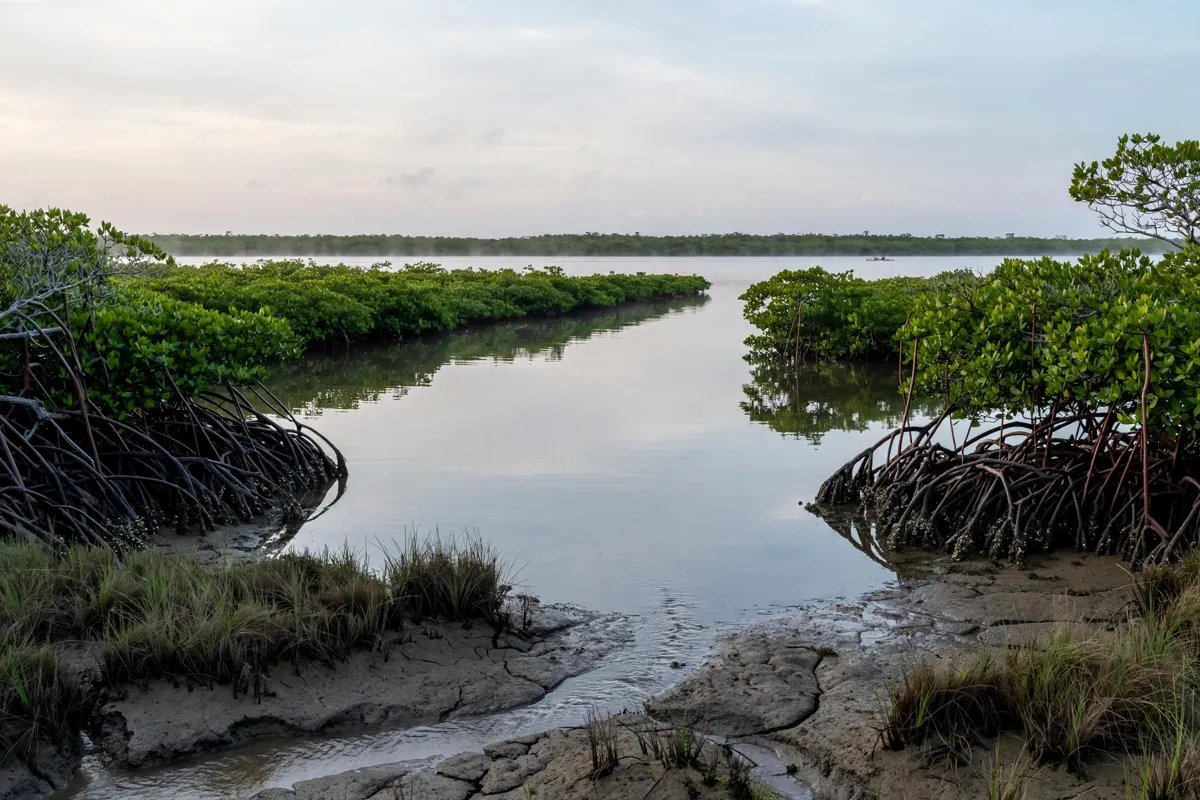
The refuge is on Sanibel Island, Florida, at 1 Wildlife Drive, Sanibel, FL 33957-3032. It was established in 1945 as the Sanibel National Wildlife Refuge and renamed in 1967 for conservationist Jay Norwood “Ding” Darling.
For a broader island day, the refuge can be part of a one-day Sanibel itinerary that also includes beaches and local sights. The refuge itself is a large protected area, so plan your visit around the route or trails you want to explore rather than expecting to cover everything at once.
What wildlife and landscapes can you see?
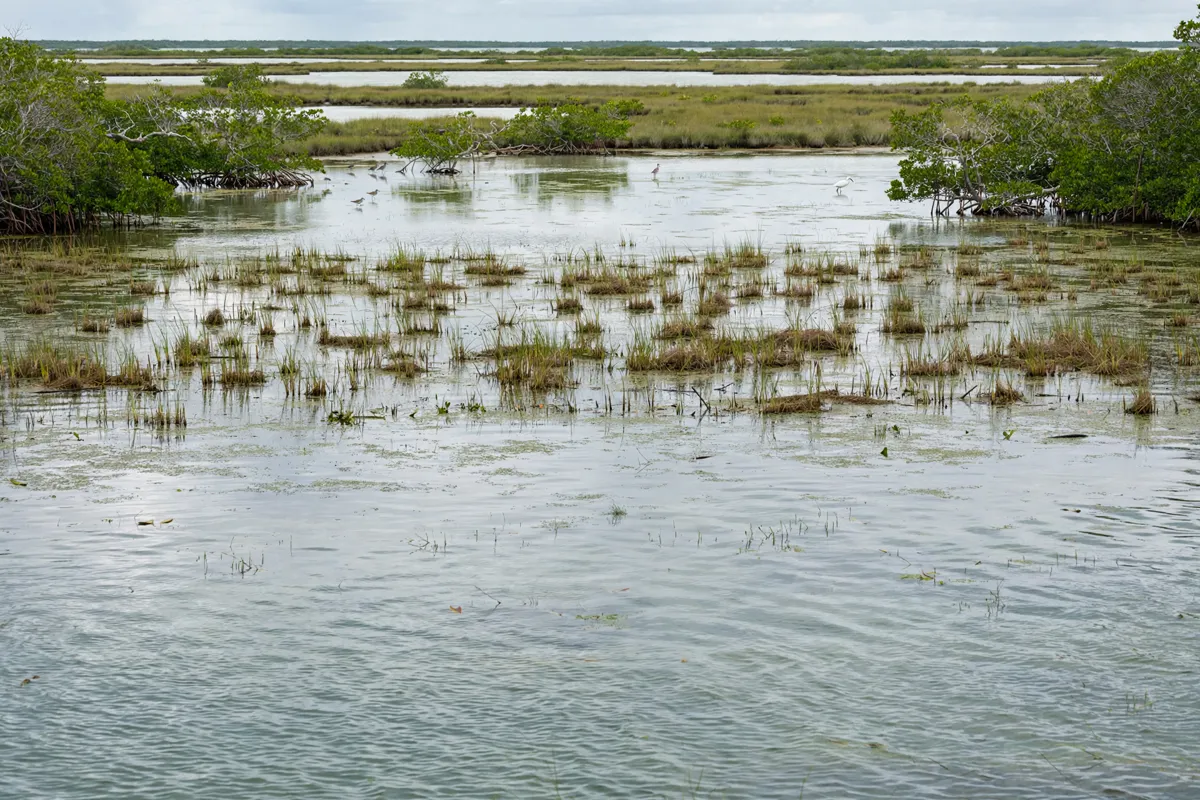
The refuge protects more than 6,470 acres of mangrove forest, submerged seagrass beds, cordgrass marshes, and subtropical hardwood hammocks. The U.S. Fish & Wildlife Service describes it as part of the largest undeveloped mangrove ecosystem in the United States.
More than 245 bird species live in the refuge. Wildlife viewing is one of its visitor activities, alongside birding, photography, boating, fishing, biking, hiking, and education programs. For a better chance of seeing wildlife along Wildlife Drive, the refuge recommends timing your visit for low tide.
How can you explore Wildlife Drive and the trails?
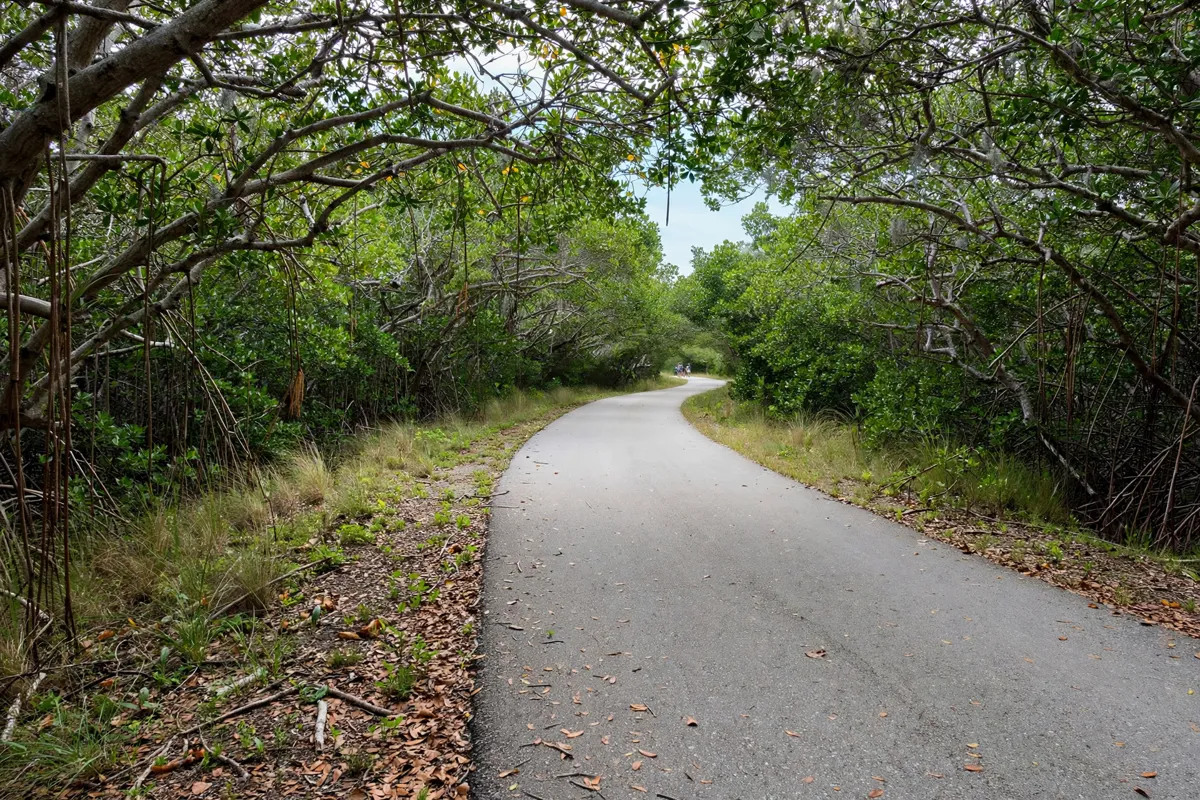
Wildlife Drive is a four-mile, one-way road with a 15 mph speed limit. You can drive, cycle, or walk the route, or join a guided tram tour. If you’re driving, pull over on the right to visit trails, overlooks, and an observation tower.
The Indigo Trail is a four-mile round trip from the Visitor & Education Center parking lot to the Cross Dike. The refuge directs visitors to reach it via Wildlife Drive, turning left at the fee booth.
The Wildlife Education Boardwalk branches from Indigo Trail, three-tenths of a mile from the center, and has a two-story observation pavilion overlooking a freshwater area.
Two other routes offer different settings: Wulfert Keys Trail is a one-third-mile trail off Wildlife Drive toward Pine Island Sound, while Bailey Tract is off Tarpon Bay Road, three miles from the Visitor & Education Center. Bailey Tract is open from sunrise to sunset and free.
A guided tram tour lasts 90 minutes and is offered by Tarpon Bay Explorers, the refuge’s official concessionaire, located two miles from the Visitor & Education Center. If you’re planning to visit from the airport, how to get from RSW to Sanibel can help with that part of your trip.
What facilities and access details should you know?
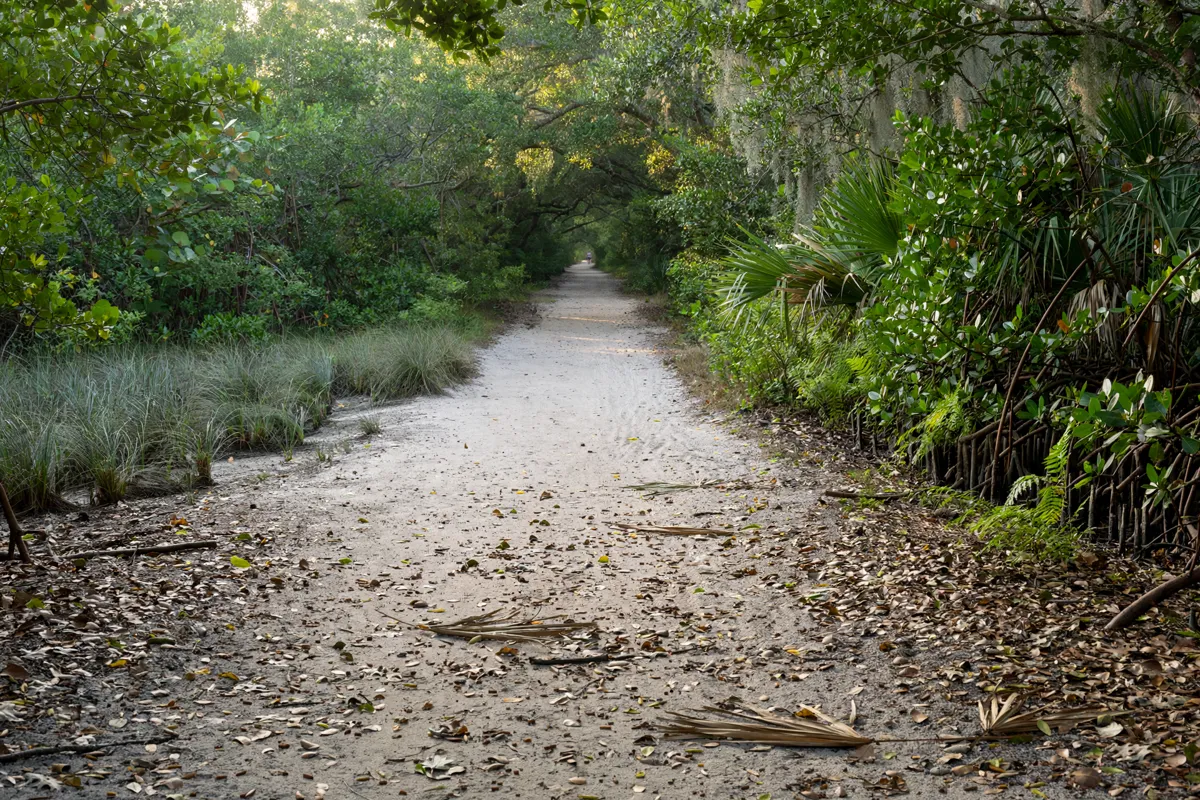
The Visitor & Education Center is free and open from 9 a.m.–4 p.m.; it is closed Fridays and federal holidays. The Wildlife Education Boardwalk is along Indigo Trail, but the boardwalk between the center and the fee booth is closed.
Dogs are permitted on Wildlife Drive, Indigo Trail, and Bailey Tract when kept under control on a leash no longer than six feet. If you plan to bring a dog, keep it leashed on these routes.
What are the refuge’s fees and opening hours?
Wildlife Drive admission is $10 per vehicle and Indigo Trail admission is $1 per person. Federal passes are available at the fee booth and Tarpon Bay Explorers.
Wildlife Drive is open Saturday through Thursday and closed every Friday. Its hours vary by month: January and December hours are 7 a.m.–5:30 p.m., while June and July hours are 7 a.m.–8 p.m.
Visitors must leave refuge lands no later than 30 minutes after legal sunset. Hours and access details can change, so check the official site before you go.
How can you plan for conditions and wildlife viewing?
Low tide is the refuge’s recommended time for wildlife viewing on Wildlife Drive. The road and trails are open from sunrise to sunset with an entrance pass or fee, and federal passes are available at the fee booth and Tarpon Bay Explorers.
Wildlife Drive has a low speed limit, and you can stop on the right to visit overlooks and trails. Leave enough time for the one-way route and any trail walk you choose. The refuge’s main phone number is (239) 472-1100.
FAQs
How long is Wildlife Drive?
Wildlife Drive is a four-mile, one-way route. You can drive, cycle, or walk it, or take a guided tram tour.
What is the best time for wildlife viewing?
The refuge recommends visiting Wildlife Drive at low tide for wildlife viewing.
Is Indigo Trail free?
Indigo Trail admission is $1 per person. Federal passes are available at the fee booth and Tarpon Bay Explorers.
Are dogs allowed at the refuge?
Dogs are allowed on Wildlife Drive, Indigo Trail, and Bailey Tract when controlled on a leash no longer than six feet.